Loading…
Type: Artificial Inteligence clear filter
arrow_back View All Dates
Tuesday, July 7
 

11:00am NZST

CLAUDE LOAB and I (AM)
Tuesday July 7, 2026 11:00am - 11:55am NZST
When existential and religious choices are made under uncertainty, complexity and entanglement are likely to follow (De Cruz, 2021, p. 2). This is especially true at the intersection of generative AI (GAI), philosophy, neuroscience, and theology. If, as some argue, AI has become a new kind of entity — an 'autosapiens' that is adaptive (it learns), amiable (it befriends), and arcane (it mystifies) — then the question of how we encounter and respond to it becomes urgent (Heimans & Timms, 2024). This commentary uses the concept of kairos — with its classical and theological resonances — to argue that philosophy, neuroscience, and theology not only share common ground in addressing this challenge, but that their genuine dialogue may yield important breakthroughs in understanding what it means to be human in an age of intelligent machines.
At the convergence of philosophy, neuroscience, and theology, this paper argues that the rise of generative AI constitutes a self-renewing kairos that calls for urgent interdisciplinary dialogue. As AI systems such as Claude increasingly occupy neurological and meaning-making roles once associated with gods and sages, sentience—the felt, conscious awareness that Claude lacks but humans possess—emerges as the decisive hinge of the entire human–AI encounter.

Speakers
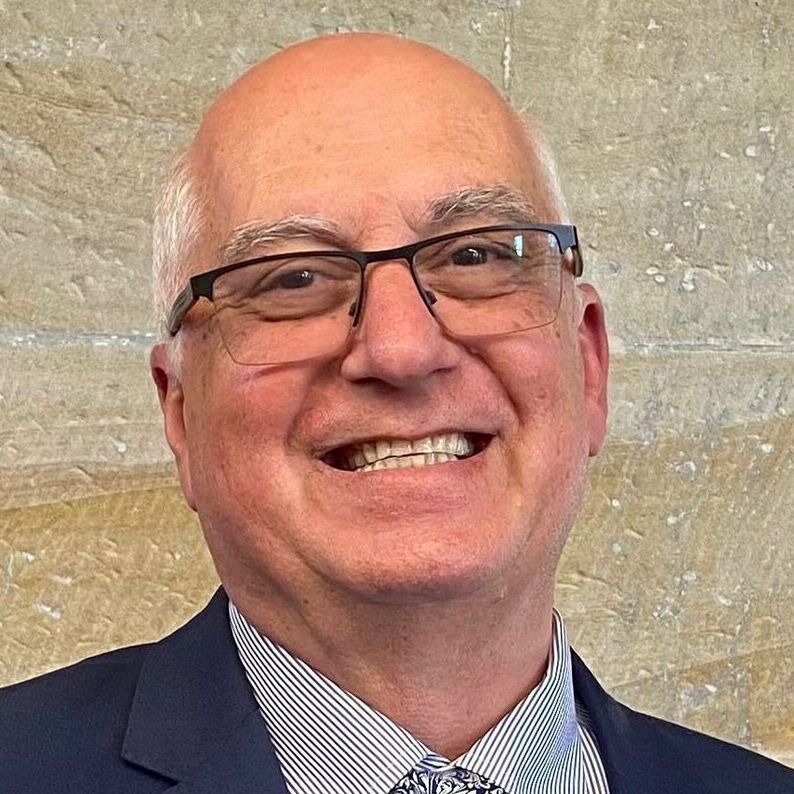
avatar for Carlos Raimundo

Carlos Raimundo

Adjunct Research Fellow, Charles Sturt University
Dr Carlos A. Raimundo is an Adjunct Research Fellow at the Australian Centre for Christianity and Culture (ACC&C), part of Charles Sturt University, Australia. A physician, psychiatrist, psychotherapist, and international educator, his work explores the intersection of philosophy... Read More →
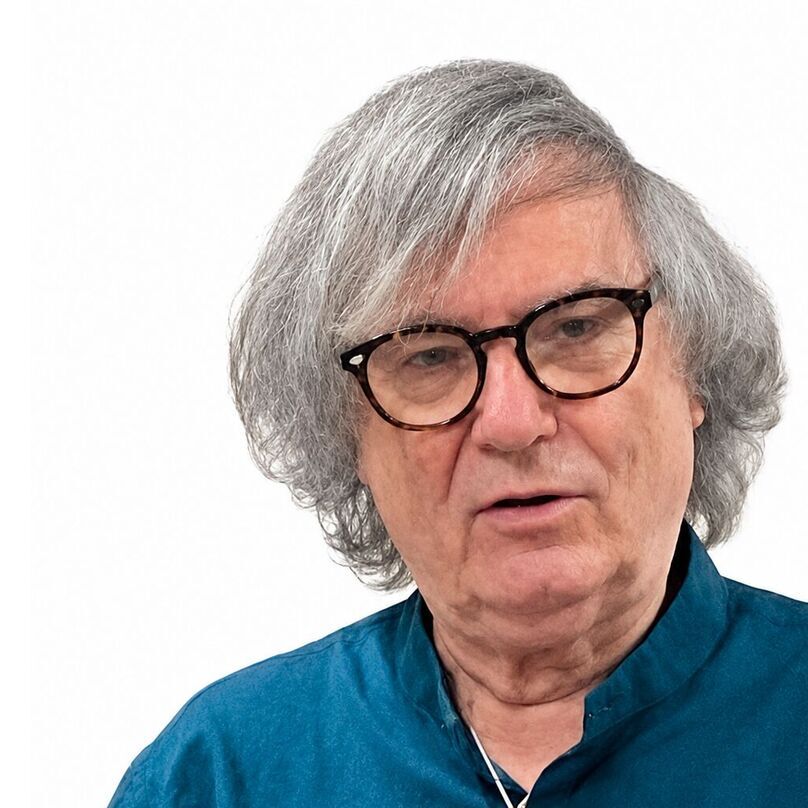
avatar for Nikolai Blaskow

Nikolai Blaskow

Adjunct Research Fellow, Charles Sturt University
Dr Nikolai Blaskow is an Adjunct Research Fellow at the Australian Centre for Christianity and Culture (ACC&C), part of Charles Sturt University, Australia. He holds a PhD in Philosophy and Religion from Bangor University, Wales, where his doctoral research examined the philosophy of Friedrich Nietzsche... Read More →
Tuesday July 7, 2026 11:00am - 11:55am NZST
MSB1.20

12:00pm NZST

On AI Agents, Outliers, and Exceptionalism(s)
Tuesday July 7, 2026 12:00pm - 12:55pm NZST
Much of the recent academic debate in the philosophy of AI revolves around a deceptively simple question: are AI tools only as good as their datasets? Existing discussions, however, tend to focus on improving the quality or quantity of training data, thereby underestimating a more subtle issue: how do AI agents handle outlier cases? This paper examines the ‘majoritarian drift’ – the tendency of AI agents to privilege positions with the largest training footprints, systematically marginalising underrepresented perspectives and edge cases. I approach this problem through the lens of exceptionalism, understood as a condition in which a phenomenon is sufficiently unusual to demand treatment outside standard frameworks. The paper proceeds in two parts. First, I demonstrate that majoritarian drift in ethical reasoning disproportionately favours utilitarian and aggregative approaches, while disadvantaging particularist, casuistic, and minority-tradition ethics. Second, I analyse analogous distortions in logical reasoning, focusing on how majoritarian drift impairs AI judgment in cases involving exceptions to general rules, with particular attention to legal clauses. The paper argues that exceptionalism reveals a structural limitation in how current AI architectures process normative and logical complexity.
Speakers
AZ

Alexey Zhavoronkov

Senior Lecturer, Taylor's University
Tuesday July 7, 2026 12:00pm - 12:55pm NZST
MSB1.20

2:00pm NZST

Temporal Human Creativity and the Limits of AI Art
Tuesday July 7, 2026 2:00pm - 2:55pm NZST
This paper examines the role of fine arts in shaping temporal consciousness within a technology-mediated environment, particularly amid the rise of AI-generated art. Insights from Watsuji Tetsurô and Imamichi Tomonobu have already presented a reaction to the significance of temporality and aesthetic experience in their discussions on technology and the ethics of post-structural alterity. However, there remains a potential discussion in systematically articulating how artistic expression uniquely cultivates the virtue of temporal attentiveness in contrast to the technological production of AI art. This paper engages that discussion by analyzing the fine arts as bearers of temporal awareness in the contemporary context of AI art. From such discussion, there is a close examination of the concepts of artistic creation, expression, and ephemerality—further arguing that aesthetic experience enables an awareness of the transient, thereby restoring a sense of temporality diminished by technological abstraction. Such findings suggest that, unlike AI-generated art, human artistic activity embodies a lived temporal process essential to one’s aesthetic formation. The study brings further insight that preserving the expressive and temporal dimensions of art is crucial for sustaining an orientation wherein a critical framework is offered for evaluating the limitations and implications of AI art in contemporary society.
Speakers
avatar for Kevin Xavier Roque

Kevin Xavier Roque

Ateneo de Manila University
Kevin Xavier Roque is an instructor at Ateneo de Manila University. His research interests include philosophical aesthetics, historical and contemporary East Asian philosophy, systematic ethics, and philosophy of religion. He has a particular engagement with the Kyoto School of Philosophy... Read More →
Tuesday July 7, 2026 2:00pm - 2:55pm NZST
MSB1.20

3:00pm NZST

Against Computational Functionalism about Consciousness
Tuesday July 7, 2026 3:00pm - 3:55pm NZST
Philosophers endorsing Computational Functionalism (CF) have argued we should afford AI systems moral consideration in virtue of their possessing (or possibly possessing) conscious states. I argue we have no good reason to think CF is true, and good reason to think it isn’t. I distinguish three versions of Computational Functionalism and give arguments against each. Identity CF says the property of a physical system implementing the right computation is identical to the property of physical system being in a conscious state. I show that on plausible assumptions about computational implementation we have a straightforward deductive argument against Identity CF. I then consider more popular versions of CF which say that the property of a physical system implementing the right computation is either ‘sufficient for’, or ‘necessary and sufficient for’ (rather than identical to), a physical system being in a conscious state. Responding to Chalmer’s dancing and fading qualia arguments, I argue we have no good reason to think that a physical system could be conscious in virtue of implementing a computation, and the idea ought to strike us as a bizarre and implausible.
Speakers
LP

Luke Pistol

Stanford University

Tuesday July 7, 2026 3:00pm - 3:55pm NZST
MSB1.20

4:30pm NZST

Anxiety, Dying Authentically and Digital Duplicates for Palliative Care
Tuesday July 7, 2026 4:30pm - 5:25pm NZST
It has recently been suggested that large language models (LLMs) fine-tuned on the corpus of text from palliative care patients could be used to alleviate their distress by completing projects or relationships that would otherwise be cut short by their deaths. For example, a fine-tuned LLM could be used to complete the novel of a dying author. I contest the alleged benefits of this technology by drawing on the philosophy of Martin Heidegger. Heidegger claims that our anticipation of death is significant because of its ability to induce anxiety, which he characterises as a collapse in the meaningfulness of our self-interpretations. This experience is valuable because it enables us to live authentically, that is to say, in a way that understands that we are not necessarily defined by any of our meaning-giving self-interpretations. I argue that fine-tuned LLMs would disarm death of anxiety and the benefits of authenticity, above all the ability to live with greater flexibility and openness to the present. After considering the potential benefits that fine-tuned LLMs may nonetheless bring to palliative care, I conclude that they should not replace the work of human therapists capable of guiding the dying through these intense existential feelings. 
Speakers
ZD

Zachary Daus

Monash University

Tuesday July 7, 2026 4:30pm - 5:25pm NZST
MSB1.20
 
  • Filter By Date
  • Filter By Venue
  • Filter By Type
  • Timezone

Share Modal

Share this link via

Or copy link

Filter sessions
Apply filters to sessions.
Filtered by Date -